About Heather McDaniel
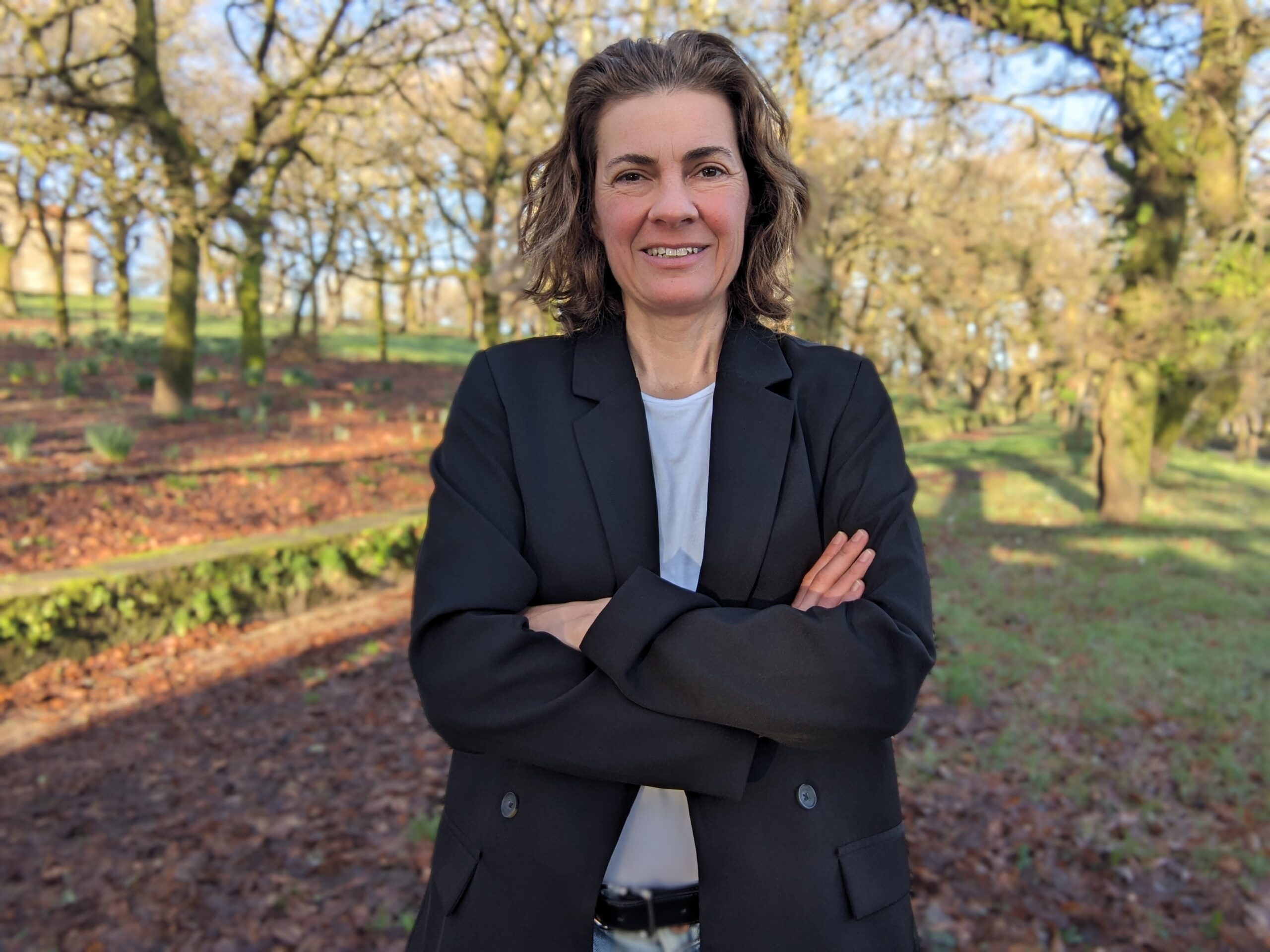
I see what’s not there.
The decision that didn’t get made. The conversation that happened in the hallway but never in the room. The dynamic that everyone feels but nobody names. The thread of meaning running through a piece of writing that the writer hasn’t consciously placed there yet. I’ve spent most of my life learning to notice the invisible connections that shape how people relate, decide, create, and move together, often without anyone being fully aware of them.
That’s what runs through everything I do, whether I’m working with a leadership team on why their decisions keep stalling, guiding a small group of women through a week of writing in Bologna, or walking the sacred sites of Tuscany with people who have come looking for something they can’t quite name. The container changes. The quality of attention doesn’t.
How I got here…
For twenty years, I worked in strategic communication and marketing. I have a Master’s degree in communication and a background in political science, which taught me to pay attention not only to messages, but to power, relationships, incentives, and the systems around them.
Over time, I became more interested in what communication problems were revealing than in finding better language to smooth them over. A stalled decision, a recurring conflict, or a message that never quite lands is often telling you something about the conditions underneath: who has authority, what people are assuming, what isn’t being said, and how the system is actually working.
So my work shifted from messaging to the conditions around it. From surface symptoms to the patterns underneath.
My thinking draws on some unlikely sources: Renaissance geniuses, contemplative traditions, architecture, and systems thinking. Not because I’m trying to be interesting, but because the best frameworks for understanding human systems rarely come from business literature. What those sources share is an attention to the space between the space, the invisible architecture that determines what a system can hold, what can emerge inside it, and whether it sustains the people working within it.
I think about human systems the way architects think about buildings. Not just what’s visible, but what the structure makes possible. Not just what’s there, but what the design allows to happen. I’ve come to understand my role as creating the conditions for what needs to emerge. I don’t fill the space. I shape it so that what needs to come forth can.
The work…
Today, the work takes several forms.
Organizations & Leaders
I work with companies and leadership teams when something is getting in the way of execution, decision-making, coordination, or change. The Organizational Readiness Diagnostic helps identify what is happening; the Leadership Team Lab is for when the team itself is where the work needs to happen.
Speaking & Learning
I speak and design participatory learning for conferences, associations, professional communities, and organizations. Talks, Creative Leadership Labs, workshops, and masterclasses explore how people work, lead, create, and adapt together. My Erasmus+ and adult education work is part of this too.
Retreats in Italy
I’m developing small retreats built around attention, creativity, writing, and reflective practice. They offer time away from ordinary routines to notice what can be difficult to hear when life is full.
Writing
I write Letters from the Joyful Rebellion, a personal column about the things I notice, the questions I keep returning to, and what they tell me about the way we live. It’s for curious people who enjoy following an idea somewhere unexpected. Writing is where many of the questions behind the rest of my work begin.
Who I am underneath all of that
I’m American, based in Spain, and an Italian citizen through ancestry. My family’s roots are in Calabria, in southern Italy.
Which means my connection to Italy is real and complicated in equal measure. The Italy I’m drawn to, Renaissance Florence, Franciscan Umbria, the contemplative tradition, is not the Italy I came from. I’ve spent a lot of time thinking about what it means to feel genuinely called to a place that isn’t quite your origin, to belong to something ancestrally while finding your way toward it on your own terms.
That gap, between the roots you have and the ones you’re growing toward, turns out to be a remarkably generative place to work from.
I’m a queer Christian who has spent years learning to encounter the sacred when traditional institutions don’t always leave a seat at the table. My relationship with God is currently complicated, which feels more honest than the alternative. I keep showing up anyway, at the page and in the work, which I suppose is its own form of faith.
I’m a writer before I’m anything else. Everything I do begins with the word, with the attempt to find language precise enough to hold what’s actually true. That’s what I bring to a leadership team and to a retreat in Florence and to a blank page at six in the morning: the conviction that finding the right words for something is never just an aesthetic exercise. It’s how we find out what we actually think.
If any of this sounds familiar
Most of the people who find me are trying to make sense of something: a team that isn’t working as well as it could, an audience they want to engage, a piece of writing that won’t leave them alone, or a desire to step outside ordinary life long enough to pay attention differently.
If you want to work together, start a conversation. If you’re curious about the things I’m noticing and where those questions lead, you can find Letters from the Joyful Rebellion on Substack.
Everything I do begins with a conversation, or a word on a page. Usually both.